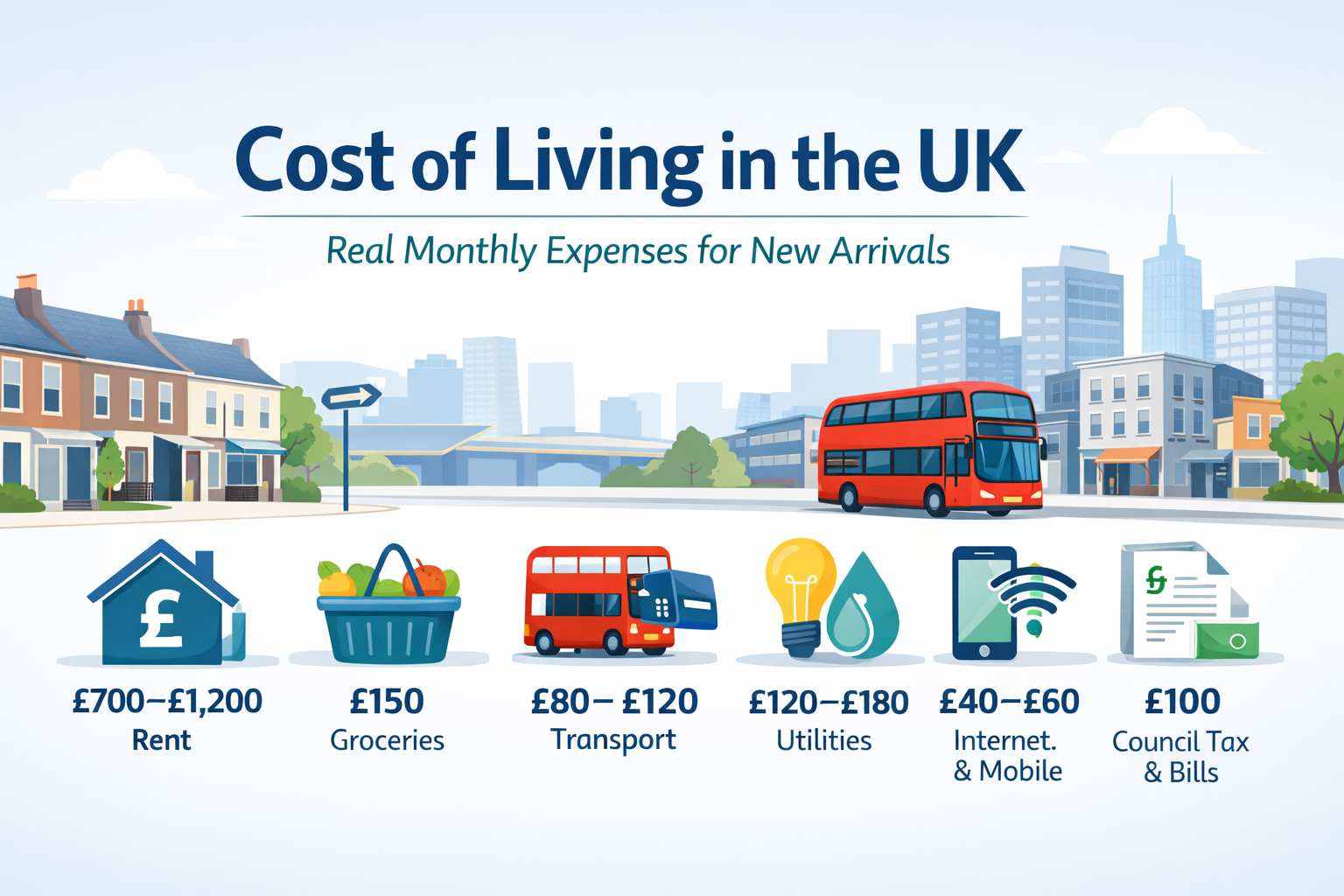
From my personal experience after moving to the UK, the cost of living is the single biggest surprise for most newcomers. Before arrival, many people focus on visas, flights, and accommodation. What often gets underestimated is how quickly small, everyday costs add up once you start living here.
Based on my own experience in the UK—and from what I’ve observed among other new arrivals—this guide breaks down realistic monthly expenses, not ideal figures you see in promotional blogs.
What “Cost of Living” Really Means in the UK
In my experience as a newcomer, cost of living in the UK is not just about rent. It includes:
- Housing and council tax
- Utilities (gas, electricity, water)
- Food and groceries
- Transport
- Mobile, internet, and basic services
- Personal and unexpected expenses
A common issue people face is planning only for rent and food, then feeling financially stressed within the first month.
Rent: The Biggest Monthly Expense
From what I personally observed, rent varies more than any other cost in the UK.
Average Monthly Rent (Single Person)
- Shared room: £450 – £700
- Studio flat: £700 – £1,100
- 1-bed flat: £900 – £1,400
📌London vs Other Cities
One thing I noticed after moving to the UK is how sharply rent drops outside London. Cities like Birmingham, Bristol, Leicester, and Sheffield are far more manageable for newcomers.
Example:
A friend rented a room in London for £750 that was smaller than a £500 room in a northern city.
Council Tax: Often Overlooked but Mandatory
From my experience, council tax is one of the most commonly forgotten expenses.
- Shared accommodation: £0 – £70 (sometimes included)
- Studio/flat: £90 – £160
Many first-time renters assume rent includes everything—this is not always true. Always ask.
Utilities: Gas, Electricity & Water
Based on what I’ve observed, energy costs in the UK depend heavily on usage and insulation.
Average Monthly Utilities
- Gas & Electricity: £60 – £120
- Water: £25 – £40
🔎 One thing I noticed is that older houses cost more to heat, especially in winter.
Internet & Mobile Phone Costs
From my personal experience, the UK offers good internet coverage at reasonable prices.
- Home broadband: £25 – £35
- Mobile SIM (monthly): £10 – £20
Many newcomers start with pay-as-you-go SIMs, then switch to contracts after settling.
Food & Groceries: Realistic Monthly Cost
In my experience, grocery costs depend on shopping habits, not just income.
Average Monthly Grocery Cost
- Single person: £150 – £250
- Couple: £280 – £400
Shopping at budget supermarkets can cut costs significantly.
Example:
A £40 grocery basket from a budget store may cost £65 at a premium supermarket for similar items.
Transport: Daily Travel Costs
From what I’ve observed, transport expenses depend on city size and commute distance.
Monthly Transport Costs
- Bus pass: £60 – £90
- Train commute: £100 – £200
- Occasional travel: £40 – £60
📌 Many newcomers save money by choosing accommodation closer to work or study.
Health & NHS Costs (Basic Reality)
From my experience, NHS treatment is mostly free after paying the immigration health surcharge. However:
- Prescriptions (England): ~£9.90 per item
- Dental & eye care: Mostly private unless exempt
A common issue people face is delaying dental care because they assume it’s free—it usually isn’t.
Personal & Hidden Monthly Costs
From what I personally observed, these are the costs that quietly drain budgets:
- Toiletries & cleaning items: £20 – £40
- Clothing (seasonal): £30 – £60
- Social life & eating out: £50 – £120
- Emergency/unplanned costs: £30 – £70
Total Monthly Cost of Living (Realistic Estimate)
Single Newcomer (Outside London)
£900 – £1,300 per month
Single Newcomer (London)
£1,300 – £1,800 per month
These figures are based on real spending patterns, not minimum survival budgets.
How Newcomers Can Reduce Living Costs
From my own experience in the UK:
- Share accommodation initially
- Use monthly transport passes
- Cook at home more often
- Avoid impulse purchases in the first 3 months
- Track spending weekly, not monthly
Small habits make a big difference.
Final Thought
From my personal experience, living in the UK is financially manageable, but only if expectations are realistic. Understanding actual monthly expenses before and after arrival can prevent stress and help you settle confidently.
Frequently Asked Questions
Q: Is £1,000 per month enough to live in the UK?
From what I’ve observed, yes—but only outside London, with shared accommodation and careful spending.
Q: Is food expensive in the UK?
In my experience, groceries are affordable if you shop smart, but eating out regularly becomes expensive.
What expense surprises newcomers the most?
Council tax and energy bills. Many people don’t expect these to be separate from rent.
Q: Is the UK more expensive than other European countries?
Based on real-life comparisons, rent and transport are higher, but groceries are often cheaper than expected.
Q: Can students survive on part-time income?
From what I’ve seen, many do—but budgeting becomes critical, especially during winter months.
