Navigating the British immigration system in 2026 requires more than just a job offer; it requires a digital-first mindset. Following the 2025 Immigration White Paper, the UK has transitioned into a fully digital border, making physical documents a thing of the past. Whether you are a high-skilled professional, a seasonal worker, or an employer, understanding your UK Visas and Work Rights 2026 is essential to maintaining legal status and ensuring a smooth career transition in the United Kingdom.
The 2026 Visa Landscape: Identifying Your Route
In my experience assisting newcomers, the first hurdle is selecting a route that matches both your skills and the new 2026 salary thresholds. The Home Office now prioritizes “High-Value” migration, with the Skilled Worker Visa remaining the primary path for most international talent.
1. The Skilled Worker Visa (2026 Standards)
To qualify for a Skilled Worker visa this year, you must meet the updated criteria:
- Minimum Salary: Generally £41,700 (or the “going rate” for your specific job code).
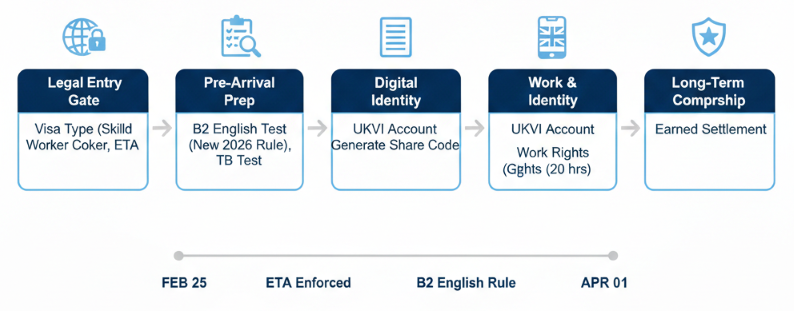
- Language Proficiency: A significant shift occurred on January 8, 2026. All new applicants must now prove English ability at Level B2 (Upper Intermediate), up from the previous B1 requirement.
- Sponsorship: You must have a valid Certificate of Sponsorship (CoS) from an A-rated licensed employer.
2. Digital Transition: The eVisa System
Physical Biometric Residence Permits (BRPs) are now officially obsolete. Your “visa” is now a digital record linked to your passport via a UKVI account.
- Proving Your Status: You no longer show a card to employers. You must generate a “Share Code” from the GOV.UK website.
- Travel Tip: Ensure your passport details are always updated in your UKVI account to avoid being denied boarding at the gate.
⚡ Technical Alert: Don’t Get Blocked at the Border
As part of our UK Visas & Work 2026 framework, the shift to digital-only status is now mandatory. If you are traveling after February 25, 2026, a valid visa is not enough—your current passport must be technically synced with your UKVI account.
Are you travel-ready? See our technical guide on How to Link Your Passport to Your UKVI Account to avoid travel delays.
UK Visas and Work Rights 2026: What You Need to Know
Understanding your UK Visas and Work Rights 2026 is not just about getting in; it’s about staying compliant once you arrive. The “Earned Settlement” reforms introduced this April mean that your conduct and contribution in the workplace directly impact your future path to Permanent Residency.
Your Essential Rights as a Sponsored Worker
- The Right to a Fair Wage: You must be paid at least the salary stated on your CoS. If your employer reduces your pay below the 2026 threshold, your visa could be at risk.
- Switching Employers: You can change jobs, but your new employer must be a licensed sponsor, and you must apply for a new visa before starting the new role.
- Supplementary Work: Most work visa holders can work up to 20 hours per week in a second job, provided it is in the same profession or on the Immigration Salary List.
Step-by-Step: Getting Started with Your Application
If you are ready to begin, follow this logical sequence to avoid common 2026 pitfalls:
- Check the SOC Code: Ensure your job title matches the 2026 list of eligible occupations.
- Take the B2 SELT Test: Do not book your visa until you have your B2 English certificate from an approved provider (like IELTS or Pearson).
- Create your UKVI Account: This is your digital identity. Use a permanent email address you will have access to for years.
- Prepare for the Immigration Skills Charge: Employers now face higher fees for sponsoring overseas talent—ensure your sponsor has factored this into your offer.
UK Visas & Work Directory
Explore our deep-dive guides for every 2026 requirement: