Moving to the UK is exciting, but from my personal experience, it can also feel confusing if you arrive unprepared. Many people focus only on visas and flights, but in reality, daily life in the UK depends on preparation done before you arrive.
Based on my own experience in the UK, the smoother your preparation, the easier your first weeks will be. This checklist covers the most important things you should plan before moving to the UK, explained in a practical, real-world way.
Packing Tips
Based on my own experience in the UK, overpacking is common — and often unnecessary.
- Weather-appropriate clothing matters more than fashion
- Important documents should always be in hand luggage
- Some everyday items are cheaper to buy in the UK
A common issue people face is packing items that are rarely used, while forgetting essentials like adapters or important paperwork.
Accommodation Planning
A common issue people face is assuming long-term accommodation can be arranged immediately after arrival. From what I’ve observed, this is rarely the case.
- Temporary accommodation is often necessary at first
- Viewing properties remotely carries risks
- Rental scams are common before arrival
From my personal experience, understanding how renting works in the UK before you move helps you avoid rushed decisions and financial loss.
Other Pre-Arrival & Legal Foundation
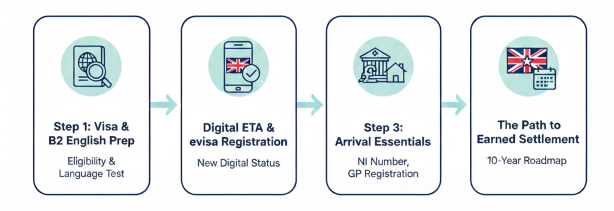
- Verify Visa Eligibility: Popular routes like the Skilled Worker visa now require a minimum salary of £41,700 and a higher English proficiency level (B2) as of January 2026.
- Register for your eVisa: The UK has phased out physical Biometric Residence Permits (BRPs). Ensure your immigration status is linked to your digital UKVI account before travel.
- Electronic Travel Authorisation (ETA): From February 25, 2026, even visa-free visitors (like those from the USA or Europe) must obtain a digital ETA before arriving at the boarding gate.
The First 7 Days (Settling In)
- Secure a UK SIM Card: Many verification services (like banking and the NHS) require a UK mobile number for two-factor authentication.
- Apply for a National Insurance (NI) Number: Essential for working and paying tax. You can apply online as soon as you have your visa and UK address.
- Register with a GP: Healthcare in the UK is provided via the NHS. Do not wait until you are sick; register with a local doctor’s surgery immediately upon arrival.
Financial & Long-Term Planning
Based on many real-life cases I’ve seen, you should plan for:
- At least one to two months of living expenses
- Open a UK Bank Account: “Challenger” banks like Monzo or Revolut are often faster for newcomers, but high-street banks (Lloyds, HSBC) are better for building a long-term credit history.
- Understand “Earned Settlement”: New 2026 reforms mean the path to permanent residency (ILR) may now take up to 10 years for some routes, emphasizing your economic and community contribution.
- Life in the UK Test Prep: If your goal is long-term settlement, start reviewing the 3rd Edition Handbook early. Passing this test remains a mandatory requirement for Indefinite Leave to Remain.
Common Mistakes to Avoid
From what I’ve observed, these mistakes appear repeatedly among newcomers:
- Arriving without understanding basic UK systems
- Relying on verbal promises instead of written information
- Underestimating initial costs
- Delaying important registrations
Based on many real-life cases I’ve seen, most of these issues are avoidable with proper planning and preparation.